Sensory Bubble Tube Lamp — Color-Changing Calming Light with Floating Fish, 2.67 ft
Free shipping on orders $50+. Taxes calculated at checkout.
- Chosen and explained by a pediatric occupational therapist
- Free shipping on orders over $50
- Secure checkout · Return policy
Not sure this fits your child? Book a free 15-minute consult with our OT team →
About this tool
For the child who needs something slow to watch — a quiet, glowing column of rising bubbles and drifting fish that gives their eyes, and their nervous system, a place to land.
In OT sessions, one pattern comes up again and again: the hardest part of screen time often isn't the screen. It's the moment it turns off. The tablet goes dark, all that fast-moving input stops at once, and a child who seemed settled a second ago is suddenly upset, restless, or falling apart.
What usually helps isn't a bigger consequence or a longer warning. It's a bridge — something slow and predictable to look at while the body shifts down from fast input to calm.
What is a sensory bubble tube lamp, and how can it help kids calm down?
A sensory bubble tube is a tall, lighted column where streams of bubbles rise and small floating fish drift up and down while the color slowly shifts. For kids who seek visual input — sometimes called visual stimming — it offers that input in a slow, predictable, low-demand way. Families commonly use it as a calm-down spot, an off-ramp when screen time ends, or part of a bedtime wind-down.
Who this may help
- Kids who seek visual input — staring at lights, watching things spin or flicker, flicking fingers in front of their eyes
- Kids who struggle when screen time ends and need something else to shift their attention to
- Kids who need a quiet spot to reset after school or after a big feeling
- Families setting up a calm-down corner or a calmer bedtime routine
- Classrooms, therapy rooms, and sensory spaces that need a calming visual focal point
Sensory systems supported
- Visual: slow vertical motion and gradual color change give the eyes something to follow — without the fast cuts and rewards of a screen
- Auditory: a soft, steady bubbling hum (about 40–45 dB, per the manufacturer) that some kids find settling as background sound
- Calming/regulation: repetitive, predictable input that asks nothing of the child
Is visual stimming something to stop?
Stimming is one of the ways many kids help their bodies regulate. Rather than trying to stop a child from seeking visual input, OTs often look for a safe, predictable outlet for it — something that meets the need without overloading the system. A bubble tube is one of those outlets. If stimming is getting in the way of safety, learning, or daily routines, that's a good reason to talk with an OT. Read more: Why Does My Child Flap Their Hands or Rock? A Pediatric OT Explains Stimming.
How to use it to make screen time endings easier
- Give a heads-up before the screen goes off (for example, 5 minutes, then 1 minute).
- Turn the bubble tube on before the screen goes off, so there's already something moving to look at.
- Hand over the remote and let your child pick the color — a small choice that gives back a little control.
- Sit together and watch the fish for 3–5 minutes. Keep talking to a minimum.
- Then move on to the next thing: dinner, bath, homework, or bed.
This doesn't replace screen limits or routines — it softens the in-between moment. For the bigger picture, see How Screen Time Can Affect Your Child's Development and How Stress, Screens & Sensory Input Shape Emotional Regulation.
Bubble tube vs. other calming visual tools
| Bubble tube lamp | Liquid motion timers | Tablet or video | Lava lamp | |
|---|---|---|---|---|
| Motion | Slow and continuous | Slow, 1–2 minutes per flip | Fast cuts, constant novelty | Very slow |
| What the child does | Watches; picks a color | Flips and watches | Taps, swipes, chooses | Watches |
| Hard to stop? | Rarely — nothing to win or finish | Rarely | Often — built to keep attention | Rarely |
| Best for | Calm-down corner, screen off-ramp, bedtime | Quick reset at a desk or on the go | Entertainment, not winding down | Adult ambiance |
| Watch out for | Tall — place where it can't be pulled over | Small; supervise kids who throw | Transitions off it are often the hard part | Glass gets hot — not a kid-reachable choice |
Want something smaller for school or the car? The Liquid Motion Bubbler Timers give the same slow visual in a handheld size.
Setting it up
- Place it on a stable, flat surface out of the main walkway — a corner of a bedroom or calm-down space works well.
- Start with one steady color. If your child gets more alert with changing colors, skip the automatic color-change mode.
- For bedtime, dim the room, choose a soft color, and let the 8-hour auto shut-off handle the rest.
Product details
- About 2.67 ft (800 mm) tall
- 16 colors by remote, 7 colors with the built-in buttons, plus automatic color change
- Floating fish and jellyfish figures that drift with the bubbles
- Widened tube walls and a sturdy anti-tip base
- Quiet operation, about 40–45 dB (manufacturer rating)
- 8-hour auto shut-off
This may not be the right fit if…
- Lights or changing colors tend to wind your child up rather than calm them
- Your child is sensitive to light or bothered by a steady background hum
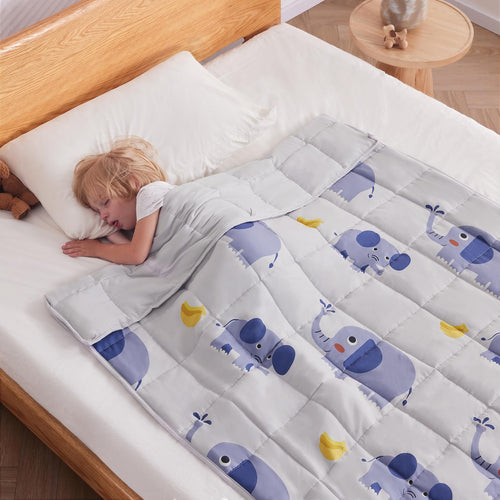
- Your child settles best with big movement or deep pressure — a movement tool or weighted blanket may fit better
- Your child is likely to climb, push, or pull on tall objects — choose a handheld visual tool instead, or supervise closely
- You're hoping it will replace screen limits — it's a bridge, not a substitute
Frequently asked questions
What is visual stimming, and can a bubble tube help?
Visual stimming is repetitive looking behavior — watching lights, spinning objects, or moving fingers in front of the eyes — that many kids use to regulate. A bubble tube offers that kind of visual input in a slow, predictable way, giving the need a calm outlet rather than trying to stop it.
Can a bubble tube help my child transition off screens?
It can make the moment easier for some kids. Turn the bubble tube on before the screen goes off so there's already something slow to look at, let your child choose the color, and watch together for a few minutes before moving to the next activity. It works best alongside clear warnings and a consistent routine.
Bubble tube or liquid motion timers — which should I choose?
Choose the bubble tube for a fixed calm-down spot, bedtime, or the end of screen time at home. Choose the liquid motion timers for a quick, portable reset at a desk, in a classroom, or in the car. Many families use both.
Can we use it at bedtime?
Yes. It runs quietly (about 40–45 dB) and has an 8-hour auto shut-off. For sleep, choose one soft, steady color rather than the color-change mode. Some children sleep best in full darkness, so you can also turn it off once your child is drowsy.
How big is it, and where should it go?
It stands about 2.67 ft (800 mm) tall. Place it on a stable, flat surface out of walkways, such as a bedroom corner or calm-down space, where it can't be pulled or knocked over.
Is this a treatment for autism, ADHD, or anxiety?
No. It's a calming visual tool that some kids enjoy and find settling. It doesn't treat any condition. If you're wondering what your child's sensory needs are, a pediatric occupational therapist can help you sort that out.
A few minutes of watching something slow can be the difference between a hard stop and a soft landing.
Pairs well with: Liquid Motion Bubbler Timers · Noise-Reducing Headphones for Kids · Weighted Sensory Blanket (Child Size). Browse more in Calm Down Corner & Meltdowns and Routines & Transitions.
More for calm & regulation
Other tools a pediatric OT might pair with this one.