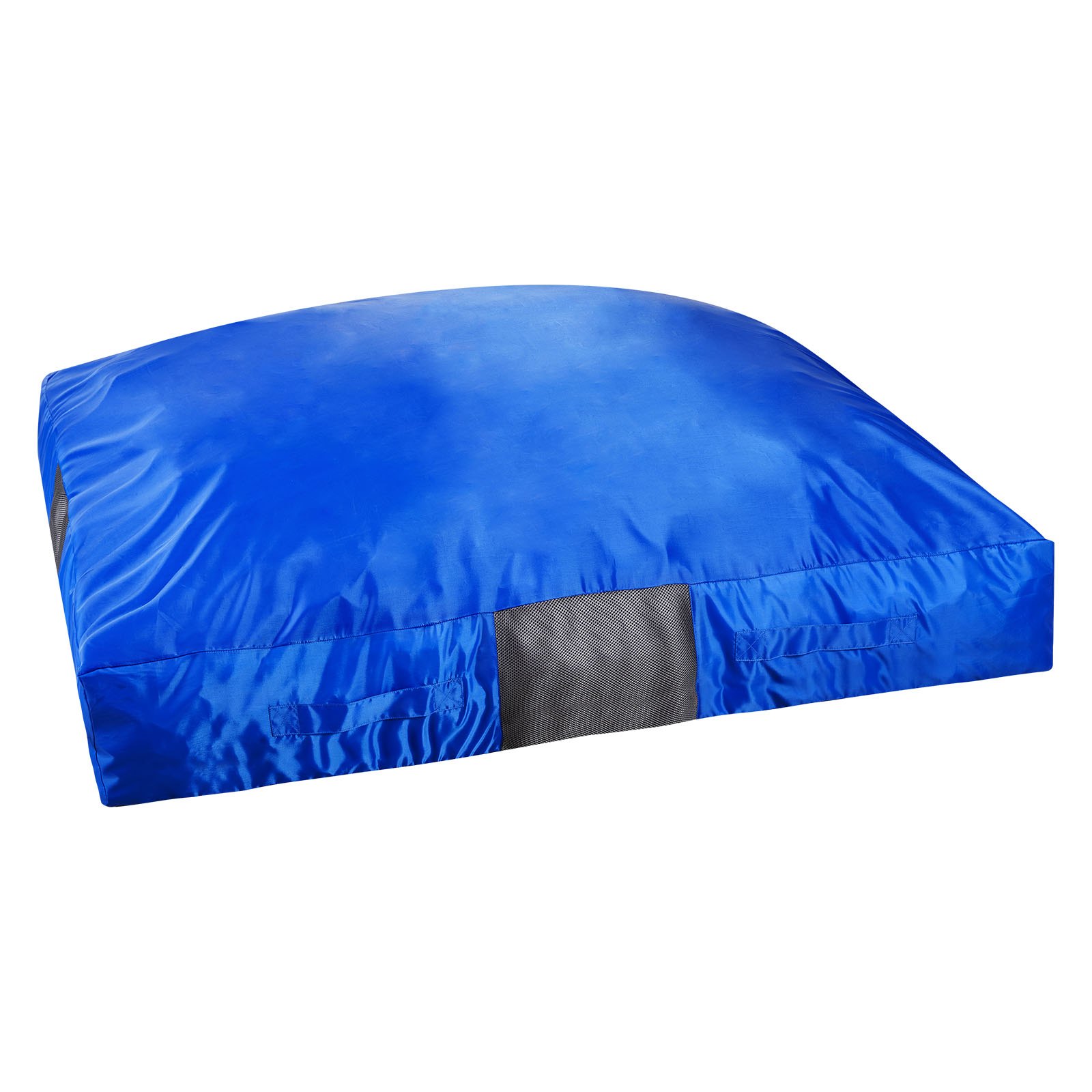
Crash Pad, 5 X 5 Ft Crash Pad For Kids Sensory With Foam Blocks And Washable Cover, Large Soft Foam Landing Zone Giant Pillow Mat, Sensory Room Equipment For Children Jumping, Relaxing & Play
$240.00
For some child, sometimes “play with me” looks like a full-body tackle.
You sit down, and your child lands beside you—hard. They push against your hands, tumble into the cushions, and ask you to do it again.
You love that laughter and closeness. But when the play spills onto a hard floor, you find yourself saying “careful” more than joining in.
What if that big movement had a cushioned place to happen, with you still part of the experience?
Here’s what an OT might notice
Imagine a pediatric occupational therapy session where a child keeps returning to big, forceful movement. They press into cushions, push against the therapist’s hands, and drop their body onto a mat.
The therapist watches before explaining. Does the child look toward them for another turn? Can they stop when the game pauses? Do they seem more comfortable afterward, or does the movement keep getting faster?
The child may be seeking strong signals from their muscles and joints. These signals support proprioception, the body’s sense of position and movement. Pushing and working against resistance provide this input.
But the movement may also carry another message: “Join me. Help me figure out how much is enough.”
Making the movement a shared experience
In this illustrative session, the therapist turns the child’s interest into a simple game. Together, they push a cushion toward the crash pad. They take turns, practice a clear stop signal, and pause to choose what comes next.
The foam pad provides a cushioned surface within the activity. The therapist provides something just as important: attention, clear boundaries, and a pace the child can manage.
At first, the child rushes ahead. With the game adjusted, they begin waiting for a turn and looking toward the therapist before starting again.
That response gives the therapist useful information. The child is beginning to share the movement, rather than simply repeat it.
Why that small change matters
At home, this might look like a child who enjoys a short movement game with you, then joins you to put on shoes. In a resource room, it might mean a supported movement break followed by a return to a classroom task.
The goal is participation. Can the child connect, pause, make a choice, and move into the next part of their day?
A 5 × 5 ft sensory crash pad can give strong movement a defined place within that routine. Its foam-block filling and washable cover make it a practical option to consider for shared active play or a supervised sensory space.
The child’s response guides how it is used. More movement is not always more helpful.
What should you notice?
Watch for the moments before and after play. Does your child seek strong movement after sitting for a long time? Do they want you nearby? Can they stop comfortably? Is the next activity easier, or are they becoming more wound up?
Those observations help you and your child’s OT understand what fits. Sometimes the useful discovery is that your child needs movement and someone to share it with.
Frequently asked questions
Where does this sensory crash pad fit best?Consider a home play area, pediatric therapy space, or supervised resource room with enough room for its 5 × 5 ft footprint and clear space around it. Placement should follow the manufacturer’s guidance and keep the pad away from furniture edges, doorways, and busy walking paths.
Can it be part of playful rough-and-tumble time together?It can be considered as a cushioned surface for shared, floor-level active play, within the manufacturer’s approved uses. Keep play child-led, agree on a stop signal, and pause when either person needs a break. Avoid pinning, forced pressure, or covering the child’s face. The connection matters as much as the movement.
Could it fit a resource room without isolating the child?Yes, it can be considered within a shared, supervised space where an adult stays available. Pair the movement area with a simple routine: choose an activity, pause together, then decide what comes next. Access should support participation rather than serve as punishment or exclusion.
Is it suitable for a child who seeks high-impact movement?It may be worth discussing with their OT when the child repeatedly seeks crashing, forceful pushing, or big body movement. “High impact” does not mean unlimited force or height. A foam pad is not a substitute for rated gymnastics equipment, and its appearance alone cannot establish safe jumping heights or impact limits.
Does the pad make crashing safe?It provides a cushioned surface, but it cannot remove injury risk. Check the manufacturer’s intended use, age and weight limits, pad thickness, placement instructions, and supervision requirements. These details are not confirmed in the information provided.
Will it calm my child?There is no guaranteed response. Some children may find an appropriately chosen movement activity helpful; others may become more excited. Notice whether the activity helps your child feel comfortable and join what comes next. An OT can help tailor the activity to their needs.