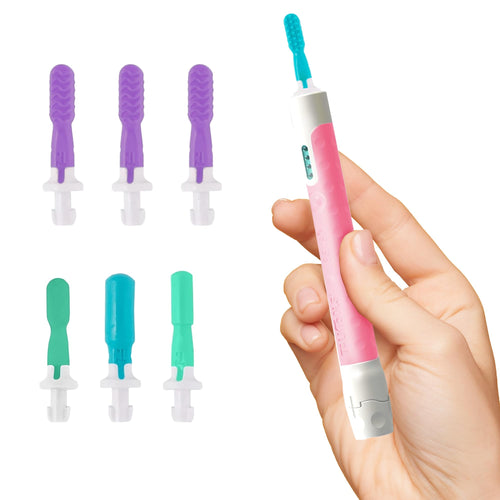
Texture-Graded Oral Tool — Ocean Blue
Free shipping on orders $50+. Taxes calculated at checkout.
- Chosen and explained by a pediatric occupational therapist
- Free shipping on orders over $50
- Secure checkout · Return policy
Not sure this fits your child? Book a 20-minute call with a pediatric OT →
About this tool
In OT and feeding sessions, this is a pattern I see often — and it actually shows up two different ways. Some kids gag or pull away the moment something new touches their lips or teeth, resisting toothbrushing and new food textures. Others chew clean through the necks of every shirt they own, always reaching for something in their mouth.
Both are the same nervous system, responding to touch and texture very differently: one is oversensitive and needs slow, predictable exposure to build tolerance; the other is undersensitive and needs safe, satisfying input it isn't currently getting.
One tool for texture sensitivity and everyday sensory chewing needs
Whether your child is oral-defensive (gagging, resisting toothbrushing, avoiding textures near the mouth) or oral-seeking (mouthing toys, chewing sleeves, always reaching for something to chew), this chew tool gives their mouth exactly the input it's asking for — texture and resistance for graded desensitization work, or a safe outlet for ongoing chewing needs.
Who it helps
- Kids with oral tactile sensitivity — gagging, toothbrushing resistance, texture-driven food refusals
- Kids who mouth toys, clothing, or objects well past toddlerhood, seeking oral input
- Kids who chew on sleeves, collars, and pencils
- Kids in speech or feeding therapy building oral awareness and tolerance
Sensory systems supported
Oral-tactile discrimination and desensitization, oral-proprioceptive input.
How to use it
- For texture sensitivity: introduce brief, predictable touch to the lips and mouth area, letting your child set the pace — never force contact
- For chewing needs: keep it accessible during car rides, homework, or transitions when oral seeking spikes
- Introduce as a substitute the moment you notice mouthing of an unsafe object
- Pair with a consistent verbal cue ("chewy time") so it becomes a recognizable regulation tool
Why an OT recommends it
The mouth is one of the most sensory-rich areas of the body, which is exactly why it can go two directions: some nervous systems read normal touch there as too intense and pull away, while others don't register enough input and go looking for more. A single, predictable chew tool works for both — offering graded, tolerable texture for a defensive mouth, and fast, effective proprioceptive feedback for a seeking one.
Safety note
Supervise use with young children. Inspect regularly for wear and replace if damaged. If using for texture desensitization, always let your child control the pace and stop before it becomes distressing. Not a feeding utensil — for oral-sensory use only.
FAQ
How is this different from a regular teether? Teethers are designed for infants; this is built for the ongoing oral-sensory needs of older kids — both desensitization work and everyday chewing — with firmer, more durable material.
My child gags easily — is this safe to use? Yes, when introduced gradually and led by your child's comfort level. For a more structured, multi-step desensitization approach, pair with our graded oral desensitization toolkit and your child's OT or SLP guidance.
Will this stop my child from chewing on clothes? It won't eliminate the need for oral input, but gives it somewhere safe to go — most parents see fewer collar/sleeve-chewing incidents once a substitute is consistently offered.
Can my child use this at school? Yes — many parents send one in a backpack pouch alongside a 504/IEP sensory accommodation.
Dishwasher safe? Yes, top rack.
Is this related to ARFID or picky eating? Oral tactile sensitivity is one factor some families and clinicians consider when picky eating is severe, texture-driven, or rises to the level of ARFID (Avoidant/Restrictive Food Intake Disorder) — though ARFID is a clinical diagnosis, not something this tool treats on its own. If food refusal is affecting your child's nutrition, growth, or daily life, read our clinical breakdown of why ARFID research is behind and what it's missing about the nervous system, and consider a feeding-focused OT evaluation.
In practice, this is what we typically see once a family adds it to the routine: less resistance around the mouth for texture-sensitive kids, and for seekers, the shirt-chewing drops off within days because the need finally has somewhere safe to go.
Every product at Sensory Therapy Place is selected through the lens of pediatric occupational therapy by our founder, Earl Mamaril, MS, OTR/L.
Related: See our Texture Graded Oral Desensitization Toolkit for a more structured, multi-level approach, or our Sensory Compression Vests for kids needing calming input beyond the mouth.
Related reading: Why Does My Child Chew Everything? An OT's Guide to Oral Sensory Seeking · Why ARFID Research Is Behind — And What It's Missing About the Nervous System
This may not be the right fit if…
- Your child bites hard enough to damage chew tools
- You haven't talked with an OT or SLP about oral tools
- Your child refuses anything near their mouth. Start with hands-only play.
More for mouth, chewing & mealtime
Other tools a pediatric OT might pair with this one.