


Indoor Sensory Climbing Wall — OT-Selected Wall Gym for Kids Who Loves To Jump, Crash & Climb
$149.99
The climbing, hanging, and crashing your child can't stop doing isn't misbehavior — it's a nervous system asking for heavy work. This gym gives it a safe place to happen.
What is an indoor climbing gym, and how does it support development?
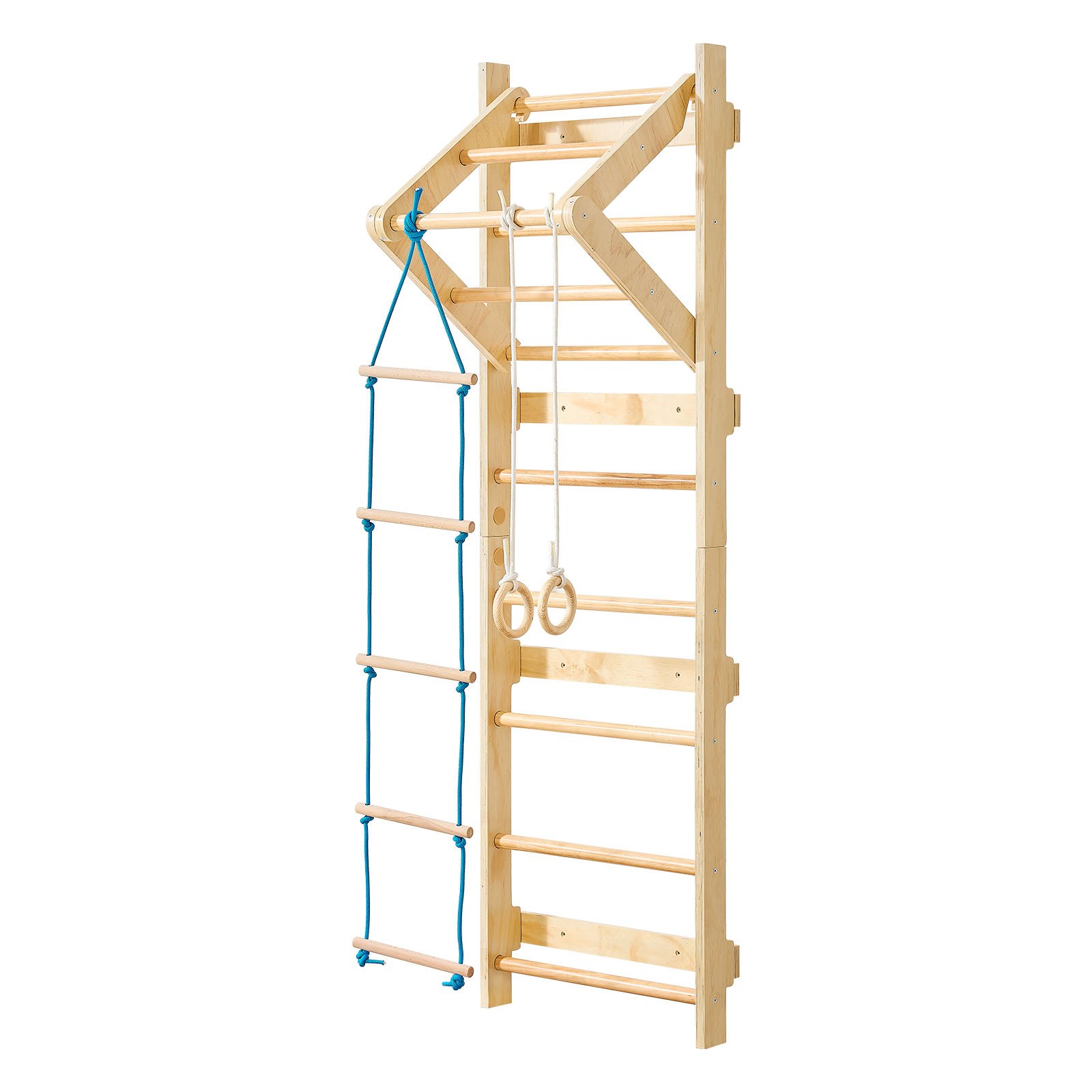
Climbing, hanging, and swinging deliver the kind of proprioceptive and vestibular "heavy work" that helps many sensory-seeking kids settle, focus, and self-regulate. This set combines a Swedish ladder, gym rings, a pull-up bar, and a rope ladder in one wall-mounted unit — enough variety that kids can choose their own challenge level instead of losing interest in a single piece of equipment.
Built for real home use: Solid pine construction, rounded edges, and a step design sized for kids' hands and feet. Rated to 220 lbs, so it holds up as your child grows — and works for parent-assisted play too.
Wall-mounted, so it makes use of vertical space instead of eating up floor space — fits a playroom corner, a bedroom wall, or a hallway.
Before you buy: This is a wall-mounted unit requiring secure installation into studs — plan for that as part of setup, and use with adult supervision, especially for younger or new climbers.
Chosen for our home sensory-gym collection by a pediatric occupational therapist, not picked off a general toy catalog.
Safe & Comfortable Climbing: The solid wooden gymnastic stall bars feature rounded, polished edges and a smooth, burr-free surface for a secure grip. The step-style climbing design fits children's hand and foot sizes for more stability, and the rope ladder uses thickened anti-slip fiber ropes for safer climbing
Why climbing is one of the most regulating activities a child can do
Climbing is full-body heavy work — every pull, reach, and step loads the muscles and joints with the deep proprioceptive input that calms and organizes the nervous system. At the same time, navigating the structure trains motor planning (praxis): the brain must sequence "hand here, foot there, now reach" in real time. That's the just-right challenge where neuroplasticity happens.
For a sensory seeker who can't stop climbing the furniture, a dedicated climbing gym redirects that drive into a safe, developmentally productive outlet — and often dramatically reduces the climbing-on-everything-else.
Who this climbing gym helps
- Sensory seekers who climb, crash, and hang on everything
- Children with ADHD who need intense movement to settle and focus
- Kids with autism who self-regulate through proprioceptive input
- Children with motor planning differences (dyspraxia) building praxis
- Kids with low muscle tone building strength and endurance
- Families replacing screen time with active indoor play
Sensory systems supported
- Proprioceptive system — climbing and hanging deliver the deep muscle and joint input that calms a dysregulated nervous system
- Vestibular system — changing positions and heights trains balance and spatial awareness
- Motor planning (praxis) — navigating the structure builds the brain's ability to sequence movement
- Bilateral coordination & core — full-body climbing strengthens the foundation for all higher skills
How to use your climbing gym
- Reconfigure for the just-right challenge. Start with the easiest setup, then increase difficulty as your child masters each configuration.
- Use it as a movement break. 10–15 minutes of climbing before homework, meals, or transitions delivers regulating heavy work.
- Add purposeful tasks. Place toys at the top to retrieve, or create simple obstacle sequences to build motor planning.
- Build a daily rhythm. Consistent climbing input throughout the day keeps the sensory seeker regulated and reduces unsafe climbing elsewhere.
Product details
- 7-in-1 modular Montessori design — multiple configurations
- Solid wood construction with child-safe finish
- Includes ladder, ramp/slide, arch, and climbing features
- Recommended ages: 2–6 years
- Indoor use; compact footprint for playrooms
- Adult assembly required
Frequently asked questions about the indoor climbing gym
How does an indoor climbing gym help kids with sensory processing differences?
Climbing delivers intense proprioceptive heavy work — the deep muscle and joint input that helps regulate a dysregulated nervous system. It also trains motor planning, balance, and core strength. For sensory seekers especially, a climbing gym provides a safe, productive outlet for the movement their body constantly craves, which often reduces unsafe climbing on furniture and other household surfaces.
What ages is the climbing gym appropriate for?
This Montessori climbing gym is designed for children ages 2 to 6. The modular 7-in-1 design lets you start with simpler configurations for younger toddlers and increase the challenge as your child's strength and motor planning develop. Always follow the manufacturer's weight guidelines and supervise play.
Will a climbing gym reduce my child climbing on the furniture?
Often, yes. Many sensory seekers climb furniture because their nervous system needs proprioceptive and vestibular input. Providing a dedicated climbing structure gives that drive a safe, purposeful outlet. Sensory Therapy Place recommends pairing the climbing gym with a consistent daily movement routine for the best results.
How much space does the climbing gym need?
The climbing gym has a compact footprint suitable for most playrooms, but you should maintain a 3-foot clear safety perimeter around it and place it on a soft surface or play mat. Measure your space before purchase and ensure adequate ceiling clearance for your child to climb and reach safely.
Is this climbing gym good for kids with autism or ADHD?
Yes — it is OT-recommended for children with autism and ADHD who benefit from heavy work and movement to self-regulate. Climbing provides the proprioceptive input that calms the nervous system and the motor planning challenge that builds developmental skills. Many families use it as a regulating movement break throughout the day.
Want a movement routine built around this climbing gym?
Book a parent coaching call with Earl Mamaril, MS, OTR/L. He'll design a daily heavy-work routine that uses the climbing gym to meet your child's specific sensory needs.
Schedule an OT Consultation